Most 3D assets are not born shippable.
They open fine in a viewer. Then you try to put them on a page, in an engine, or inside a headset, and the download stalls, the frame rate collapses, or the mesh turns inside out. Getting from that file to a usable one is hours of manual work in Blender, per asset, every time.
Text- and image-to-3D output arrives as dense triangle soup: no usable UVs, a separate 4K texture per part, geometry that was never meant to be rendered at 60 fps.
Parametric surfaces tessellate into millions of triangles and hundreds of separate objects. Accurate for manufacturing, unshippable for a product configurator.
Millions of triangles, giant texture atlases, holes, floating fragments and flipped normals. Great capture, not a realtime asset.
Oversized GLB and FBX built for offline renders: 4K maps everywhere, dozens of materials, no LODs, and a download nobody on mobile will wait for.
Upload → Analyze → Fix → Export
Four steps from the file you were handed to one you can ship. Watch it run, or come back when it's done.
GLB, FBX, OBJ, STL, PLY, STEP or a ZIP of the whole thing. No cleanup pass first.
Free. Readiness per target, full geometry and texture breakdown, every problem found.
Geompact picks the strategy, repairs the geometry, and rebuilds the asset to budget.
A verified, platform-ready file, plus the original, always downloadable.
See what is wrong before you pay for anything.
Every upload gets a readiness score per target, the numbers behind it, the problems found, and the fix Geompact would run.
Renders fine, but the download is the bottleneck
Over texture memory and draw-call budget
Cannot hold a headset frame budget
- 2.4M triangles, far past a realtime budget for one object
- 12 textures at 4096², hundreds of MB of VRAM once decompressed
- 73 draw calls across 41 near-duplicate materials
- Flipped normals and non-manifold edges in the scanned shell
- Loose fragments and holes left by the capture
- No LODs, so full detail renders at every distance
- Reduce to ~180K triangles, silhouette preserved
- Repack 12 × 4K maps into 3 × 2K atlases
- Merge 41 materials → 6, draw calls 73 → 9
- Rebuild normals, weld seams, drop stray fragments
- Generate 3 LOD levels
- Export a verified, platform-ready GLB
Illustrative report for a photogrammetry asset. Your own numbers come from your file. The analysis, the problem list and this prediction cost nothing.
One button. The whole cleanup pass.
No preset to choose and no slider to guess at. Geompact decides what the asset needs, does it, and checks its own work.
A CAD part, a photoscan and a character need different treatment. Geompact reads the asset first, then decides.
Flipped normals, degenerate faces, duplicate vertices, loose fragments, all cleaned before anything is reduced.
Reduction targeted at the budget for your platform, with the silhouette and hard edges preserved.
Oversized maps resized and repacked, duplicate materials merged, draw calls brought down.
Distance levels so the full-detail mesh is not what renders across the whole scene.
STEP or FBX in, engine- and web-ready output, without a manual round trip through a DCC tool.
The output is re-analyzed and scored, so you see what changed instead of trusting the run.
Tuned to one target, previewable in the browser, downloadable or shareable as a link.
And you can still steer it.
The automatic plan is a starting point, not a black box. Set a triangle budget, hold a texture resolution, protect a part of the mesh, all in plain words, before or after the run.
What people put through it
Same funnel every time: the asset that can't ship goes in, the one that can comes out.
Take generator output straight to something that renders in a real scene: clean topology, sane materials, a realtime budget.
Tessellated engineering geometry reduced and merged into a configurator- or engine-ready mesh instead of hundreds of separate objects.
A download visitors will actually wait for: reduced geometry, repacked textures, fewer draw calls, same look on the page.
Capture data brought inside a headset's frame budget: holes closed, fragments dropped, triangles and texture memory cut to fit.
Texture memory, material count and mesh weight pulled down to what mid-range phones can hold without dropping frames.
Real files, loaded in your browser
Open the original and the fixed asset side by side: 35 MB against 6 MB, same look. Switch models to see the same story on heavier assets.
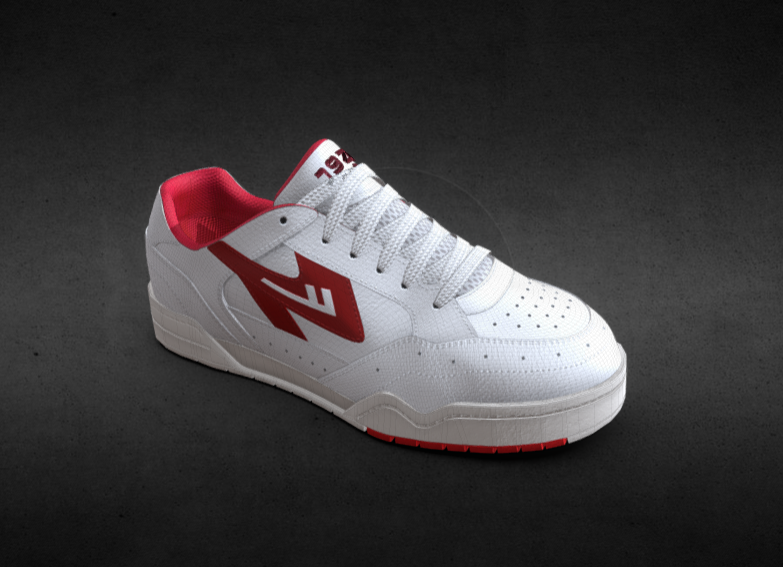
The pixels are identical. The wait isn't.
Same model, same look, first load side by side. Weight is the part your users actually feel.
Everything up to the fix is free.
The analysis, the problem list, the plan and its predicted result cost nothing. Tokens are spent on the one thing you actually choose to run.
The full analysis
Readiness per target, geometry and texture breakdown, and every problem found in the asset.
The fix plan and its prediction
What Geompact would do, the expected size and quality, and the exact token cost, before you commit.
The fixed asset
The real production-ready file, previewable and downloadable, the moment you run the fix.
Automate 3D asset processing through the API.
Most people work in the app. If assets arrive continuously, whether from a generator, a scanner rig, or a supplier feed, wire the same pipeline into your own.
Submit an asset, poll the job, pull the analysis and the result. The same pipeline the app runs.
Get called back when a job lands instead of polling for it.
Gate a build on a readiness score, or process an incoming batch before it reaches your bucket.
Runs survive a closed browser and retry on failure, with full history per asset.
API and webhooks are in build for paid plans. Ask for early access →
Analysis is free. You pay for fixes.
Start on Free: 400 tokens a month, around 10 fixes, no card. Upgrade when the volume needs it; re-runs always cost 50%.
Common questions
Give it your worst asset.
Analysis costs nothing. Upload the file and see the score, the problems and the plan. Fix it when the plan looks right.